
Agentic coding has gone from party trick to office pet. Last spring, I asked Claude Code to tidy a spreadsheet that made my knees feel like dial-up modems. I expected a gentle nudge. It handed back a small report, a corrected formula, and a note explaining itself like a very polite janitor. The lesson was not magic. It was division of labor. Humans choose the destination. The machine chooses the lane.
The new study looked at hundreds of thousands of Claude Code sessions, enough to turn a foggy rumor into a weather map. The pattern was cozy: people usually decide what to do, while Claude decides how to do it. One prompt can start a long chain of file reads, edits, commands, and explanations. When users keep tight control, the agent moves carefully. When users understand the problem deeply, the agent runs farther, writes more, and solves more of the maze in one breath.
I remember a friend, a logistics planner, who once described her warehouse routes like a detective describing a crime scene. She knew which dock was late, which label printer had a grudge, and why a truck waited outside in the rain. Claude did not need to become a warehouse philosopher. It needed her expertise as a lantern. The more precise her instructions, the more useful the output became. That is the real trick: expertise is not replaced. It is multiplied.
There is a relatable version of this in every kitchen. When I try to reheat a leftover pizza, the oven is the agent. It heats. But I choose when the cheese has crossed from beautiful to criminal. The same holds with software. The tool does not remove the need for judgment. It changes the shape of judgment. Novices can still ask for help. Experts can ask for a bigger, bolder, more accountable help. The difference is that experts give the agent better guardrails and better success tests.
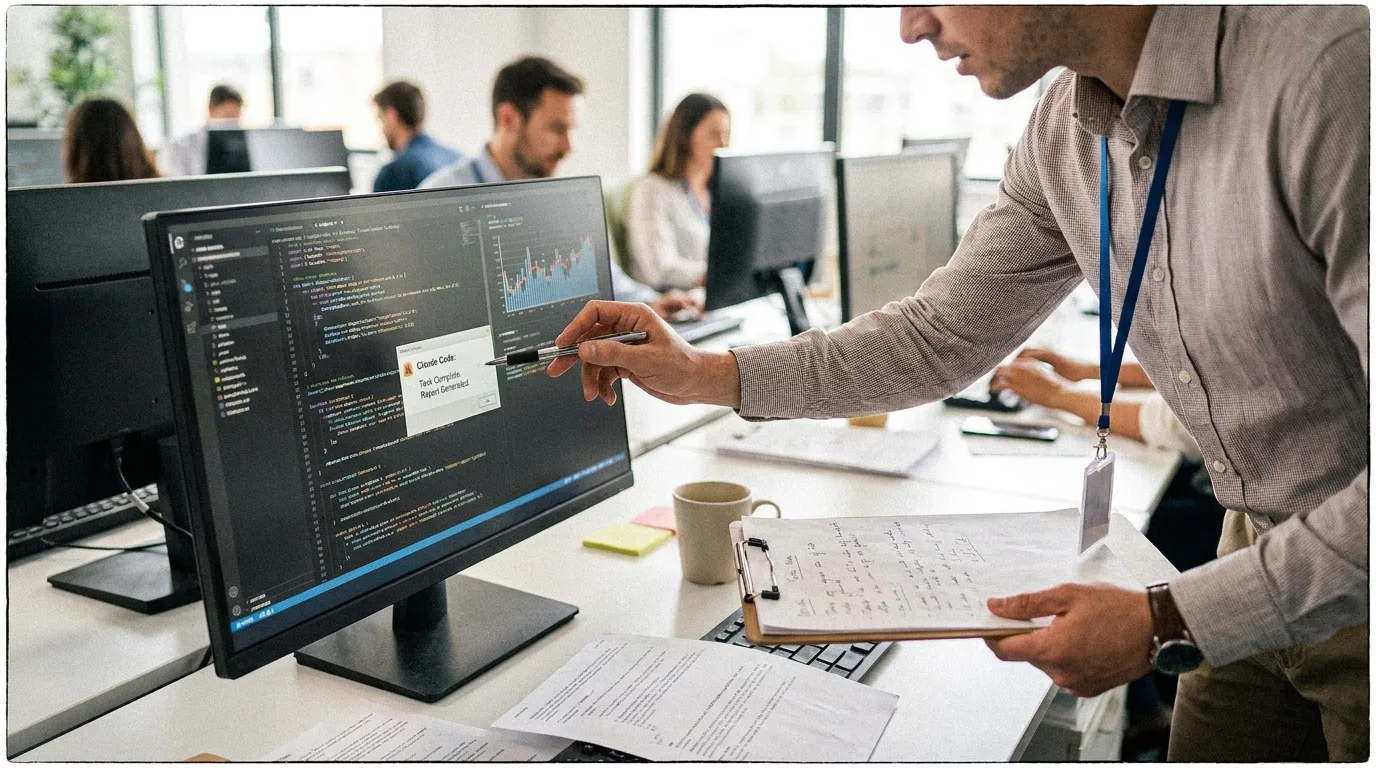
The data also show a curious migration. Debugging shrunk, while running systems, analyzing data, and writing documents grew. In other words, people stopped treating Claude as a magical repair shop and started treating it as a colleague with strong opinions and weak small talk. That matters for jobs. The work is not simply being erased. It is being redistributed. Some repetitive implementation disappears. Some new roles emerge, focused on review, context, and taste. The winners are not only coders. They are accountants, teachers, analysts, lawyers, and designers who can name the problem with clarity. If you can tell an agent what good looks like, what matters, and what must never break, you become the boss of a very energetic apprentice. The future may not be human versus machine. It may be human plus machine, with the human wearing the lanyard and the machine carrying the clipboard. Best teams will not ask who did the work. They will ask who understood the goal, who checked the seams, and who had the nerve to stop before the code became a novel.
The Lanyard and the Clipboard
 DATAFORT completes AI automation project to help BHUK Group …
 Investors are checking to see if business plans include an A…
 Episode 43: Beyond Accuracy: What Other Metrics Matter for B…
 Accountancy Newsletter – Your client’s numbers j…
 The AI didn’t escape
 Accountancy Newsletter – AI REVEALS THE ADVANTAGE HIDD…
 Episode 42: Build Your AI-Powered MVP This Weekend
 FIRST RULE OF INTELLIGENT AUTOMATION: DON’T AUTOMATE A BROKE…
 Accountancy Newsletter – Where Does Your Data Go? AI S…
 Episode 40: Supercharge Your Sales with AI Lead Scoring