I still remember the afternoon I spent wrestling with a Python package for a basic bioinformatics pipeline. Three dependency conflicts, two missing libraries, and one cryptic error message that might as well have read ‘good luck, human.’ Sound familiar? That’s the hidden toll of scientific computing. For years, researchers have been treating analysis software like a cast-iron skillet passed down through generations: reliable in theory, but requiring more elbow grease than actual chemistry. But lately, the wrench in our toolbox has started tightening its own bolts.
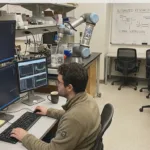
Enter agentic AI. A new field report on eight life sciences projects reveals how coding agents are quietly modernizing the brittle software backbone of modern research. Take the story of cyvcf2, a widely used library for parsing genomic data. The original code was a relic—difficult to install, painfully slow to update, and held together by what one maintainer politely called ‘historical momentum.’ Instead of spending months untangling legacy build scripts, the team handed the modernization task to an AI agent. Within days, the library was streamlined, test-ready, and actually runnable without a blood sacrifice. The agent handled the tedious plumbing; the scientists handled the science.
Yet, speed isn’t the whole story. AI agents are remarkably good at drafting the blueprint, but they still occasionally try to nail the roof on before the foundation is poured. Contributors consistently found that agents thrived on well-scoped tasks but struggled with the ‘last mile’ of validation. They’d produce clean code with unshakable confidence, even when missing subtle numerical edge cases. This has quietly flipped the researcher’s role. Scientists are no longer chained to syntax; they’re now orchestrators and inspectors, defining acceptance criteria, running parity checks, and deciding when the work is truly ship-ready.
The bigger challenge isn’t implementation anymore—it’s stewardship. Lower coding costs mean we can spawn a dozen rewritten tools overnight, but without clear ownership, today’s modernized script becomes tomorrow’s abandoned digital ghost town. The most successful projects in the report didn’t just patch code; they coordinated with upstream maintainers or established new community caretakers early on.
Ultimately, agentic AI isn’t here to replace the scientist’s intuition. It’s here to return their calendar. By absorbing the engineering drudgery, these digital assistants let researchers focus on what actually moves the needle: designing better experiments, asking sharper questions, and keeping the lights on for the tools that matter. We’re finally trading debugging dreadnoughts for agent-piloted speedboats. The question now isn’t whether we can build faster, but whether we’ll take the time to steer wisely.