
In 2026, small and medium-sized businesses are not waiting for AI to turn into a chrome-plated oracle. They are using it like a caffeinated intern who can read a spreadsheet without blinking. The most common moves are refreshingly mundane: automating repetitive tasks, spotting patterns in messy data, and helping customer service teams stop apologizing into the void. For many owners, AI is less moonshot than mop bucket: useful, a little smelly, and always near the mess.
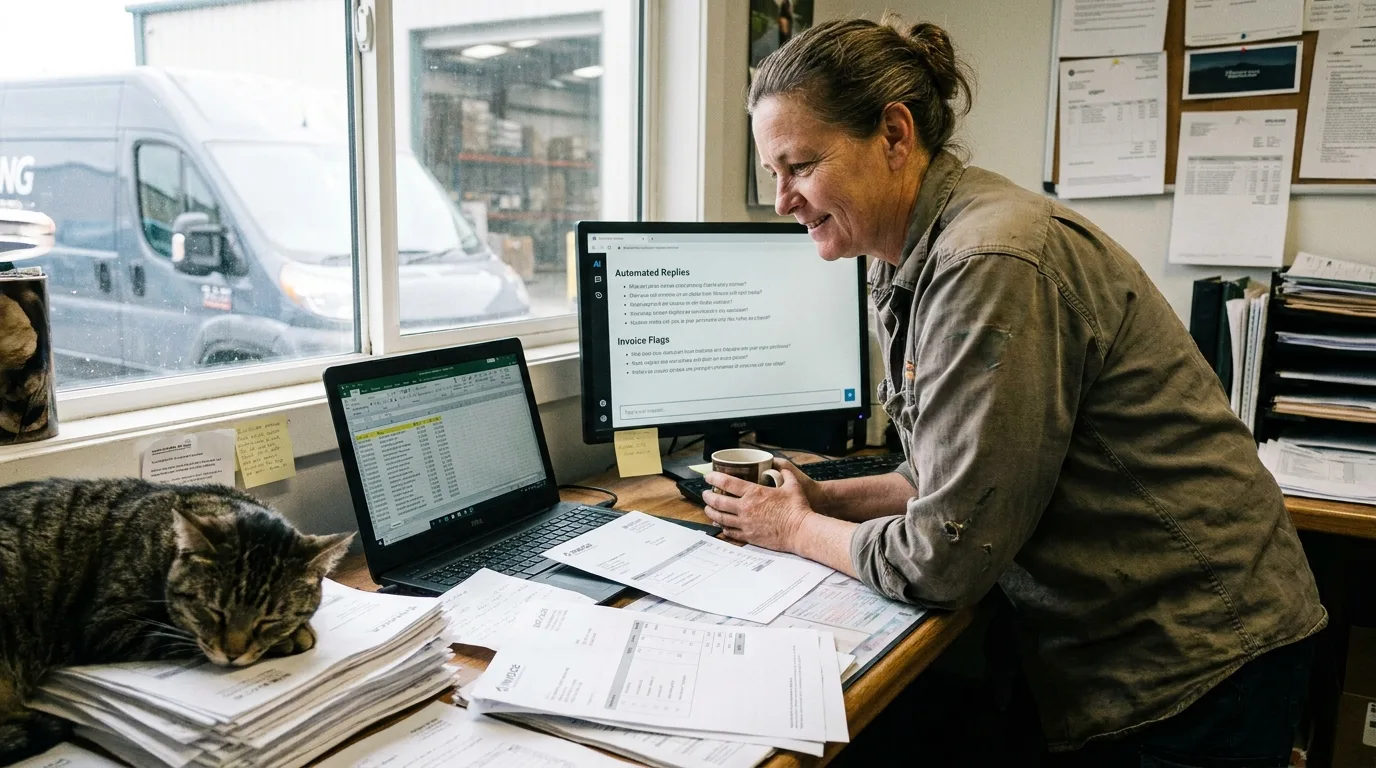
Take Lena, who runs a tiny landscaping supply shop with one warehouse, three vans, and a cat that acts like a middle manager. Before AI, Lena spent Sunday evenings matching invoices, delivery routes, and customer emails by hand. It was the kind of work that made her want to become a hermit. She tried a simple AI assistant that drafts reply emails, flags overdue payments, and suggests reorder quantities. Monday morning, the system spotted that mulch orders spike before rain but collapse during festivals. Lena laughed because she had known that for years. Then she cried happy tears, because now she could schedule her staff like a normal person.
My own brush with business AI came when I helped a bakery owner clean out an inbox that had become a paper trail of croissants. She had five hundred unanswered messages: cake questions, wedding inquiries, complaints about gluten, and one man who wanted to hire us for emotional support. We used AI to sort messages into categories, draft polite replies, and pull useful phrases into a shared knowledge base. The result was not a robot chef, but a calmer human chef. She finally had time to ask customers what they wanted instead of guessing from a calendar that looked like a hostage situation.
The broader pattern in 2026: the winners are not always the companies with the fanciest model. They are the ones that give AI a small, sweaty job and measure whether it helps. A florist uses it to predict Valentine’s waste. A mechanic uses it to answer tire questions after closing. A consultant uses it to turn scattered notes into usable dashboards. The magic is not replacing people. It is removing the parts of work that turn capable adults into button-mashing zombies.
But the lesson is practical, not mystical. AI works best when businesses start small, train the tool on their own language, and keep humans in the driver’s seat. In 2026, the smartest SMBs use algorithms the way smart gardeners use gloves: to handle the dirt without letting it stain everything else. Automate the boring. Analyze the confusing. Reply to customers without sounding like a fax machine. Then take the saved hours and do the stubbornly human part: listen, adapt, and remember that no model can replace a good idea at a good time. The future is not a robot boardroom. It is a business owner smiling because inventory stopped stealing weekends. That, honestly, feels like progress with decent manners. No drama. No doom. Just better days ahead. Dread, gone. Finally, peace.
Small Biz, Big Algorithm: How AI Became the 2026 Office Intern Who Never Sleeps
 Episode 45: From Bottleneck to Breakthrough with AI QA
 Newsletter – Beyond Standard Accounting Software | The…
 Accounting Newsletter | What is Vibe Coding and how to use i…
 Episode 44: The Platform Shift: Choosing Your AI Vendor
 DATAFORT completes AI automation project to help BHUK Group …
 Investors are checking to see if business plans include an A…
 Episode 43: Beyond Accuracy: What Other Metrics Matter for B…
 Accountancy Newsletter – Your client’s numbers j…
 The AI didn’t escape
 Accountancy Newsletter – AI REVEALS THE ADVANTAGE HIDD…