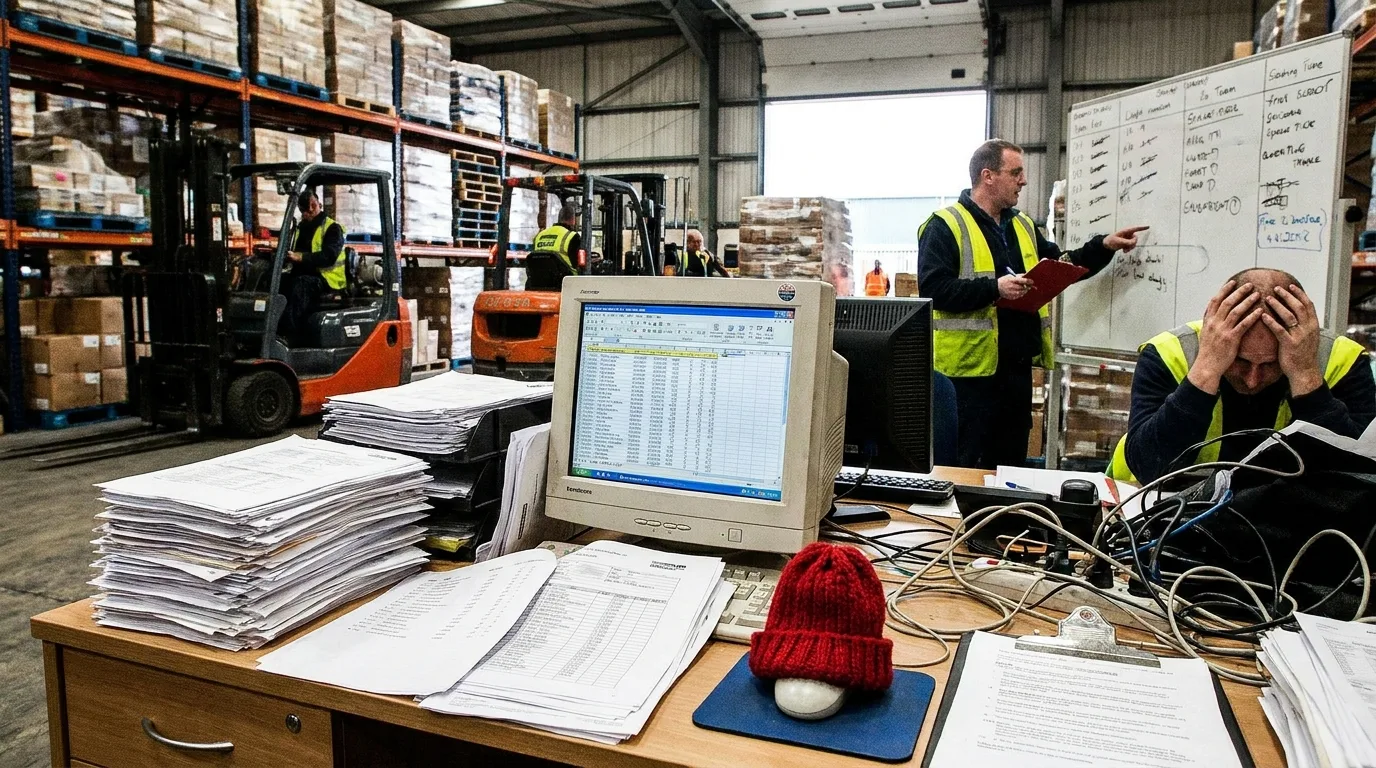
A warehouse can outgrow its systems the way a cat outgrows a teacup: suddenly there is fur, chaos, and no place for the tail. If your business has grown from a small operation into a humming, pallet-heavy machine, your CRM or spreadsheets may be wearing a tiny hat and pretending everything is fine.
Once, I helped a family-run warehouse track inventory by hand during a frantic season. We found a phantom SKU, a box that existed in the spreadsheet but not in reality. The spreadsheet had developed a sense of humour.
I have trusted a spreadsheet until the finance meeting, then watched it disagree with itself, and I know the feeling again. The screen glows, the totals balance, and somewhere beneath the formulas an office alarm is ringing.
Here are seven signs it is time to rethink your digital setup. First, billing errors appear like stubborn weeds: small, annoying, and back before you have finished sighing. Second, inventory counts drift, and everyone swears the numbers were perfect at 9 am. Third, client questions get answered from memory rather than one shared system. Fourth, teams start emailing each other updates like carrier pigeons. Fifth, nobody trusts the forecast, so decisions feel like guessing with confidence. Sixth, new hires spend their first week learning which spreadsheet is the truth. Seventh, growth feels less like expansion and more like squeezing an elephant through a biscuit tin.
The fix is not to add another lonely spreadsheet. It is to move your operations into a system that can think alongside you. AI does not replace the human judgement that keeps a warehouse honest, but it can quietly do the dull work: flagging low stock, spotting billing mismatches, summarising messy data, and nudging teams before small mistakes become expensive stories.
For warehousing businesses, this matters because the real action is not just customer relationships. It is pallets, purchase orders, product configurations, supplier quirks, quality checks, and the odd box that only your oldest warehouse manager can explain. A basic CRM may handle a few emails and contacts, but it was not built to juggle all of that. A smarter platform can link sales, inventory, finance, and operations into one sensible place, so your team is not constantly translating between systems.
The best part is that AI can feel less like a futuristic robot and more like a very reliable assistant who notices the missing comma before the invoice is sent. It can help you predict demand, clean up data, answer routine questions, and give managers a clearer view of what is happening on the floor. Your people still make the important calls, but they no longer have to do the important calls while wrestling a spreadsheet that refuses to stay open.
Growth should feel exciting, not like archaeology. If your business has outgrown its old tools, the next step is not panic. It is choosing systems that grow with you, so the warehouse can run smoothly even when the cats finally get out of the teacup.