
Software development is starting to feel less like typing and more like sending tiny robotic interns to the front line. On September 22, 2026, JetBrains announced Air, an open system for agentic software development that spans its IDEs, team delivery workflows, and organizational governance. The premise is refreshingly grown-up: let agents do some of the heavy lifting, but give humans the levers to start, review, and own the work.
Air has three main products, like a Swiss Army knife for autonomous coding. Air in JetBrains IDEs lets developers direct and orchestrate agents, track sessions, inspect diffs, and leave line comments for the agent to act on. Air Teams coordinates software delivery workflows involving humans and agents, while Air Governance handles policy, visibility, auditability, cost management, and accountability for AI-assisted work.
The launch caps roughly six months of experimentation. JetBrains introduced JetBrains Central in March 2026, then added CLI access, shared context, cloud agents, automations, governance, and AI cost controls. Now Air pushes the company beyond the single developer workbench it has nurtured for 26 years into the larger system where agentic work is initiated, executed, coordinated, reviewed, and governed.
I have a relatable confession from my first AI coding date: I once asked a model for a tiny CSS fix and it delivered the change, plus a brand-new class name no human would type sober. Verification, I learned, is the new feature branch where dignity goes to die.
A fitting anecdote came during a JetBrains demonstration, when an agent quietly repaired a flaky test and the presenter joked that its only failure was making coffee. The moment captured the appeal and the awkwardness of the new workflow: the agent was useful, fast, and faintly magical, while the human still had to prove it had not just hallucinated a happy path.
JetBrains says Air is deliberately multi-vendor, working with Claude Agent, Codex, Junie, Copilot, OpenCode, and any agent connected through the Agent Client Protocol. This matters because models are like weather: each has moods, strengths, and rankings that change every few months. Teams should not have to choose between the best available tools and clear visibility into what their engineering organization is doing.
Availability is practical rather than flashy. Air in IDEs is a plugin, so developers can keep several projects open, each with separate sessions, and track unread updates, changed files, and outgoing commits across all of them. Air Teams is in early access, offering shared cloud projects, automations for code review, release notes, and fixes, plus per-project controls for VM size, internet access, and secrets. Air Governance supports organization-wide rules, spend limits, bring-your-own keys from providers such as Amazon Bedrock, OpenAI, Anthropic, and usage analytics.
JetBrains also highlights Air Context for semantic indexing and Air Gateway for bringing terminal agents into the fold. The bigger point is not that agents can generate code, because they can. The point is that generation has become cheap, while understanding, verification, and responsibility remain stubbornly human, for now, and the IDE still matters.
JetBrains Air Turns Coding Into a Command Center for Tiny Robot Interns

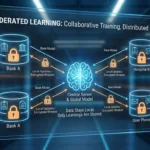 Episode 41: Federated Learning: The AI Privacy Paradox
 Newsletter: FIRST RULE OF INTELLIGENT AUTOMATION: DON’T AUTO…
 Newsletter – Where Does Your Data Go?
 Episode 40: Supercharge Your Sales with AI Lead Scoring
 Build Versus Buy: How AI Is Upending Business Software
 Accountancy Newsletter: So, how did August 7, the first MTD …
 Accountancy Newsletter: So, how did August 7, the first MTD …
 Inside the AI Research Kitchen When Coding Agents Start Doin…
 Episode 39: Knowledge Management Reimagined: Cure Corporate …
 Episode 38: The AI Product Manager: Your Most Important Hire