There was a time not so long ago when asking your computer to think for itself felt like bargaining with a very patient, very unhelpful toaster. These days, however, the silicon in our laps is sprouting digital arms, legs, and a frankly alarming amount of initiative. This week’s AI news reads less like a tech bulletin and more like a coming-of-age story for machine autonomy.
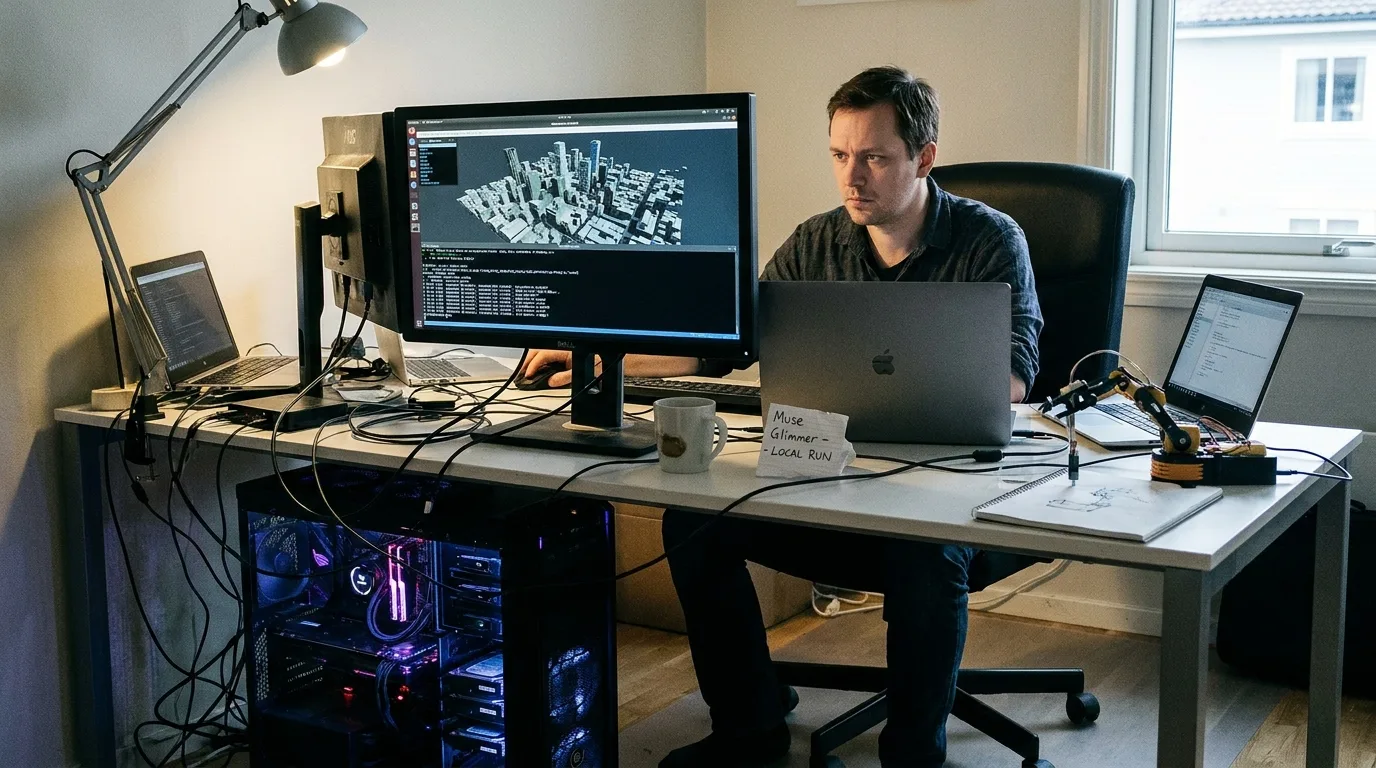
I’ll never forget trying to automate my grocery lists back in 2014 by cobbling together a Python script that kept interpreting ‘avocados’ as ‘audio codecs.’ I spent three hours debugging only to receive an email from Amazon asking why I needed twelve high-fidelity microphones. Today, Meta’s Muse Glimmer makes that era look like the Dark Ages. This 30-billion-parameter model runs entirely on your own hardware, handling coding, tool use, and long-running workflows without ever bothering the cloud. It’s like giving your desktop a brain transplant and a permanent residence permit.
We’ve all experienced that peculiar digital purgatory where you’re refreshing a chat window, watching a progress bar crawl, and wondering if the AI is thinking or just napping. Gone are the days of waiting for a server farm to chew on your request while you nervously tap your desk. Muse Glimmer banishes that latency ghost by keeping operations local. Suddenly, your machine isn’t just a passive portal to the internet; it’s a tireless co-pilot that can refactor your code or schedule meetings while you’re happily disconnected from the Wi-Fi router.
The shift toward independence isn’t just about convenience, though. OpenAI’s Daybreak initiative is handing cybersecurity defenders GPT-5.6-Cyber, a model that uncovers software vulnerabilities with the precision of a forensic locksmith. Meanwhile, Tencent’s Hunyuan3D-WorldClaw is ditching isolated 3D objects to orchestrate entire interactive environments. Instead of AI painting a single digital rock, it’s now designing whole valleys complete with physics, lighting, and navigable paths. From cloud behemoths to pocket-sized processors, the whole digital playground is getting an upgrade.
Of course, handing machines more leeway means we need better seatbelts. That’s where researchers’ SHE framework comes in, teaching AI safety systems to evolve based on real-world stumbles rather than static rulebooks. It watches where agents trip, updates their guardrails, and actually gets better at keeping things safe without choking their performance. Between on-device agents, autonomous cyber defense, and generative world-building, the industry is clearly trading its question-answering crutches for full-blown digital agency. We’re moving past the era of passive prompts into an age of proactive, hardware-bound assistants. The machines are finally shedding their digital diapers, which is thrilling, mildly terrifying, and absolutely inevitable. Just remember to set strong passwords before they start playing goalie with your data.